

Grounding techniques
After a trauma, it is normal to experience flashbacks, anxiety, and other uncomfortable symptoms. Grounding techniques can be performed without experiencing trauma and help control these symptoms by turning attention away from thoughts, memories, or worries, and refocusing on the present moment.
Try these grounding techniques
5-4-3-2-1 technique
Using the 5-4-3-2-1 technique, you will purposefully take in the details of your surroundings using each of your senses. Strive to notice small details that your mind would usually tune out, such as distant sounds or the texture of an ordinary object.
- What are five things you can see? Look for small details such as a pattern on the ceiling, the way light reflects off a surface, or an object you never noticed.
- What are four things you can feel? Notice the sensation of clothing on your body, the sun on your skin, or the feeling of the chair you are sitting in. Pick up an object and examine its weight, texture, and other physical qualities.
- What are three things you can hear? Pay special attention to the sounds your mind has tuned out, such as a ticking clock, distant traffic, or trees blowing in the wind.
- What are two things you can smell? Try to notice smells in the air around you, like an air freshener or freshly mowed grass. You may also look around for something that has a scent, such as a flower or an unlit candle.
- What is one thing you can taste? Carry gum, candy, or small snacks for this.
Categories
Choose at least three of the categories below and name as many items as you can in each one. Spend a few minutes on each category to come up with as many items as possible.
For a variation on this activity, try naming items in a category alphabetically. For example, for the fruits and vegetables category, say “apple, banana, carrot,” and so on.
Movies
Countries
Books
Sports teams
Cereals
Colours
Cars
Animals
Fruits and vegetables
Cities
TV shows
Famous people
Body awareness
The body awareness technique will bring you into the here-and-now by directing your focus to sensations in the body. Pay special attention to the physical sensations created by each step.
- Take five long, deep breaths through your nose, and exhale through puckered lips.
- Place both feet flat on the floor. Wiggle your toes. Curl and uncurl your toes several times. Spend a moment noticing the sensations in your feet.
- Stomp your feet on the ground several times. Pay attention to the sensations in your feet and legs as you make contact with the ground.
- Clench your hands into fists, then release the tension. Repeat this 10 times.
- Press your palms together. Press them harder and hold this pose for 15 seconds. Pay attention to the feeling of tension in your hands and arms.
- Rub your palms together briskly. Notice the sound and the feeling of warmth.
- Reach your hands over your head like you’re trying to reach the sky. Stretch like this for five seconds. Bring your arms down and let them relax at your sides.
- Take five more deep breaths and notice the feeling of calm in your body.
Mental exercises
Use mental exercises to take your mind off uncomfortable thoughts and feelings. They are discreet and easy to use at nearly any time or place. Experiment to see which work best for you.
- Name all the objects you see.
- Describe the steps in performing an activity you know how to do well. For example, how to shoot a basketball, prepare your favorite meal, or tie a knot.
- Count backwards from 100 by 7.
- Pick up an object and describe it in detail. Describe its color, texture, size, weight, scent, and any other qualities you notice.
- Spell your full name and the names of three other people, backwards.
- Name all your family members, their ages, and one of their favorite activities.
- Read something backwards, letter-by-letter. Practice for at least a few minutes.
- Think of an object and “draw” it in your mind, or in the air with your finger. Try drawing your home, a vehicle, or an animal
Relaxed breathing
When we are anxious or threatened, our breathing speeds up in order to get our body ready for danger. Relaxed breathing (sometimes called abdominal or diaphragmatic breathing) signals the body that it is safe to relax. Relaxed breathing is slower and deeper than normal breathing and it happens lower in the body (the belly rather than the chest).
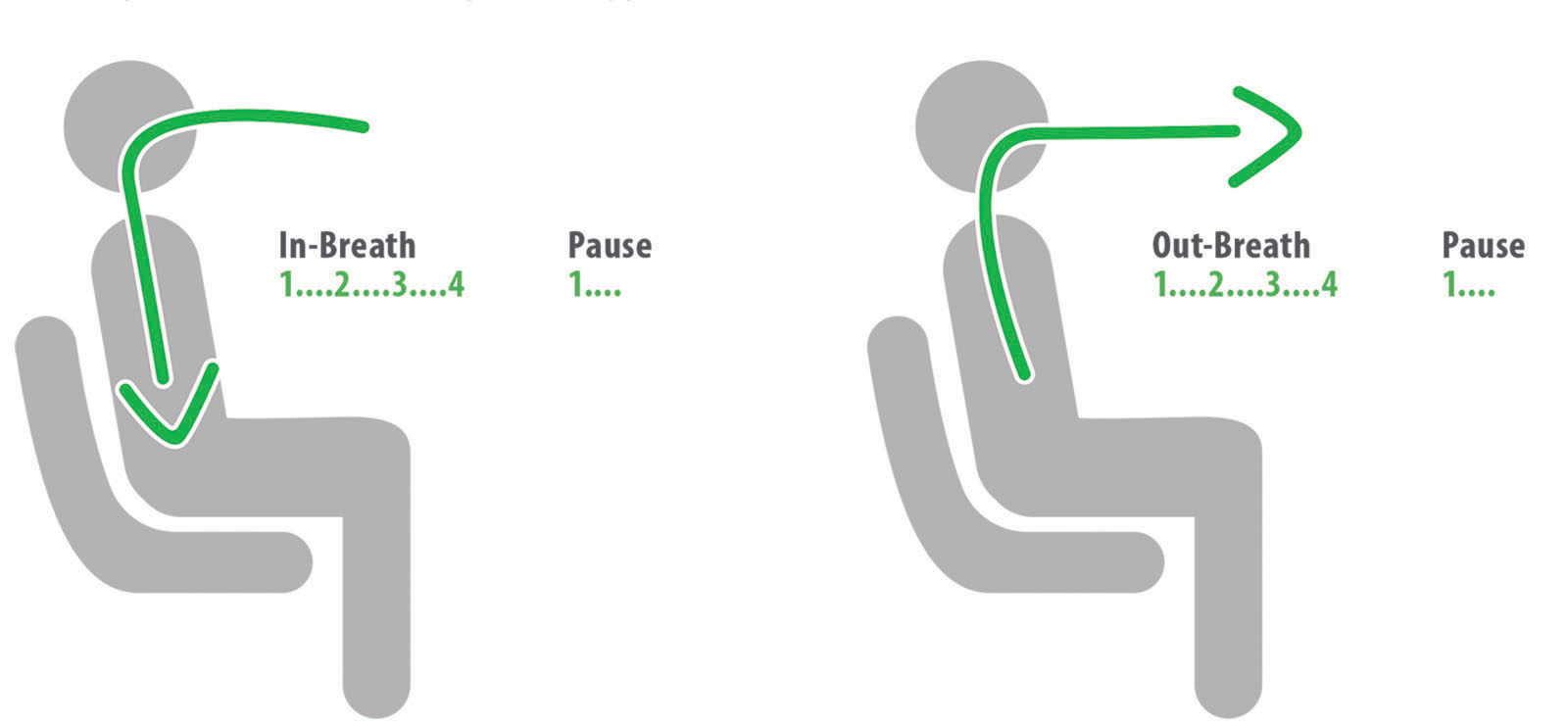
Try these self-care techniques
- Eating regularly and nutritiously
- Staying hydrated
- Getting adequate sleep
- Positive self-talk
- Taking time to exercise or be active
- Meditation and mindfulness
- Relaxation techniques (breathing techniques, progressive relaxation)
- Having a support system
- Taking time to enjoy life
- Having healthy, supportive relationships
- Maintaining life balance
- Managing time effectively
Online resources
These websites, apps, and other resources are intended for information purposes only. Mount Allison University does not endorse and is not affiliated with any of the following resources.
General resources
- CampusWELL by Student Health 101 — online health and wellness magazine for university students updated with new articles every Wednesday; articles cover a range of topics including recipes, fitness, sleep, and more
- Transitions — online resource for students transitioning to post-secondary; covers topics such as academics, health, identity, community, and getting help
Mental health organizations
- Centre for Addiction and Mental Health
- Teen Mental Health
- Canadian Mental Health Association
- Mood Disorders Society of Canada
- jack.org
- Be.There.org
- Schizophrenia Society of Canada
- National Eating Disorder Information Centre
- Canadian Alliance on Mental Illness and Mental Health
- Canadian Mental Health Association of New Brunswick
- The LINK Program (Tantramar)
Resources by category
Alcohol and substance use
- Keep It Social
- Post-secondary Education Partnership — Alcohol Harms (PEP-AH)
- Wellness Together Canada
- Canadian Centre on Substance Use and Addiction
- Here to Help
Addiction
Anxiety
- Here To Help - Resource Library
- The Anxiety Network
- Centre for Addiction and Mental Health
- Canadian Mental Health Association
Bipolar Disorder
Borderline Personality Disorder
Depression
Eating Disorders
- National Eating Disorder Information Centre
- The Looking Glass Foundation for Eating Disorders
- Centre for Addiction and Mental Health
- Canadian Mental Health Association
Generalized Anxiety Disorder
Mood Disorders
Obsessive Compulsive Disorder
- Centre for Addictions and Mental Health
- Anxiety and Depression Association of America
- International OCD Foundation
- Canadian Mental Health Association
Panic Disorder
Personality Disorders
Phobias
Post-Traumatic Stress Disorder
Psychosis
Schizophrenia
- Schizophrenia Society of Canada
- Centre for Addiction and Mental Health
- Canadian Mental Health Association
Social Phobia
Stress
Various
Apps
Calm — A mental fitness app designed to help you build the strength to face life’s ups and downs
Mindshift — Uses scientifically proven strategies based on Cognitive Behavioural Therapy (CBT) to help you learn to relax and be mindful, develop more effective ways of thinking, and use active steps to take charge of your anxiety
Breethe — A meditation app that promotes inner wellness for anxiety, stress, sleep, and more
HeadSpace — Learn a mindful approach — explore guided exercises, videos, and more to help you get healthier and happier
Wellmind — FREE — For dealing with stress, anxiety, and depression; with relaxation games, advice, and podcasts
Self-Help Anxiety Management — FREE — Create an anxiety toolkit. SAM is an app to help you understand and manage anxiety
BY CATEGORY
General
Addiction
Anxiety
MindShift
Self-help for Anxiety Management (SAM)
Depression
Depression CBT Self-Help Guide
Mood
Meditation and mindfulness
Negative thinking
Journaling
Panic Attacks
Post-Traumatic Stress Disorder
Stress
Suicide Prevention
Support