
Rare salamander discovery near Moncton challenges assumptions about urban wildlife
Scientists have discovered previously unknown populations of the rare four-toed Salamander in suburban Riverview, New Brunswick — a finding that expands the species’ known provincial range and suggests wildlife may be more resilient to human-altered landscapes than previously believed.
“As soon as we saw the distinctive ‘salt and pepper’ belly this salamander is known for, we knew we had stumbled across something special” says lead author Joshua Christiansen, a recently graduated Mount Allison University M.Sc. student in Biology and current Research Associate of Dr. Riley’s lab. “Even modest positive actions in urban landscapes can make a real difference, like picking up litter or making sure natural substrates (like leaf litter and cover objects) remain in forests. It’s a reminder that conservation doesn’t only happen in remote wilderness areas and that wildlife can thrive in our own backyards.”
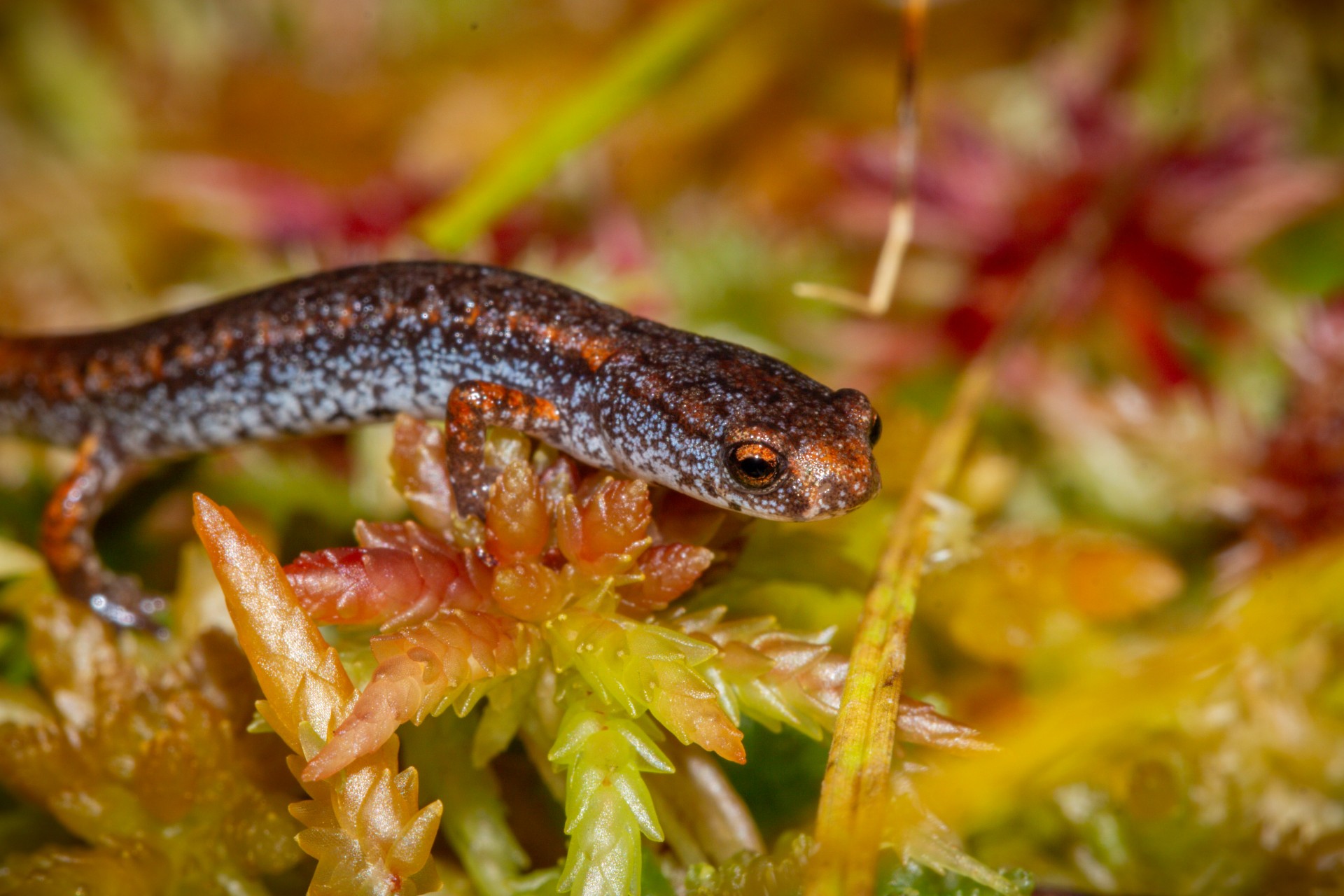
The study, published in The Canadian Field-Naturalist, documents eight salamanders at two small habitat patches about 60 kilometres from the only previously known New Brunswick population in Fundy National Park. Unlike that protected forest site, the newly discovered populations live in fragmented green spaces bordered by roads, schools, and residential development.
“We have spent a lot of time looking for Four-toed Salamanders in the province outside Fundy National Park without luck, so this discovery was really quite unexpected” says New Brunswick Museum Natural History and Zoology curator Dr. Greg Jongsma. “This species is a habitat specialist tied to sphagnum bogs and fens surrounded by forest but clearly, if their habitat needs are met, they can persist in small patches of somewhat disturbed habitat too.”
The Four-toed Salamander is the smallest vertebrate known in New Brunswick and is rarely seen due to its size and secretive behaviour, making conservation assessments difficult.
Researchers say the findings highlight the overlooked ecological value of urban and suburban green spaces.
“Discoveries like this have real implications for conservation” says co-author Dr. Julia Riley, Canada Research Chair and Assistant Professor at Mount Allison University. “Disturbed or urban-adjacent habitats may have the perception of being less important for wildlife, but our discovery suggests that, instead, green spaces in cities support a wide range of wildlife provincially and need to be protected too.”
Researchers stress that more monitoring is needed to determine whether these populations are stable and reproducing, but the discovery suggests the species may be more adaptable than previously assumed — with implications for conservation planning across the province.