
Finding her place
When Kaitlyn Souch arrived at Mount Allison, she was set on an environmental science degree.
Souch grew up in the interior of British Columbia and was looking at universities across Canada when Mount Allison caught her attention — first for its campus, and then for its small classes and opportunities to learn beyond the classroom.
“I didn’t tell my mom, but I applied,” she laughs.
After receiving acceptances from schools much closer to home, she finally shared the news: she had already accepted her offer from Mount Allison.
What she could not have known then was how much her academic path would change once she got here.
Souch’s family has roots in Upper Similkameen First Nation on her mother’s side and Finnish settler ancestry on her father’s. She had originally hoped to work toward a specially approved minor in Indigenous environments, but after arriving at Mount Allison, she found herself taking Indigenous Studies courses instead.
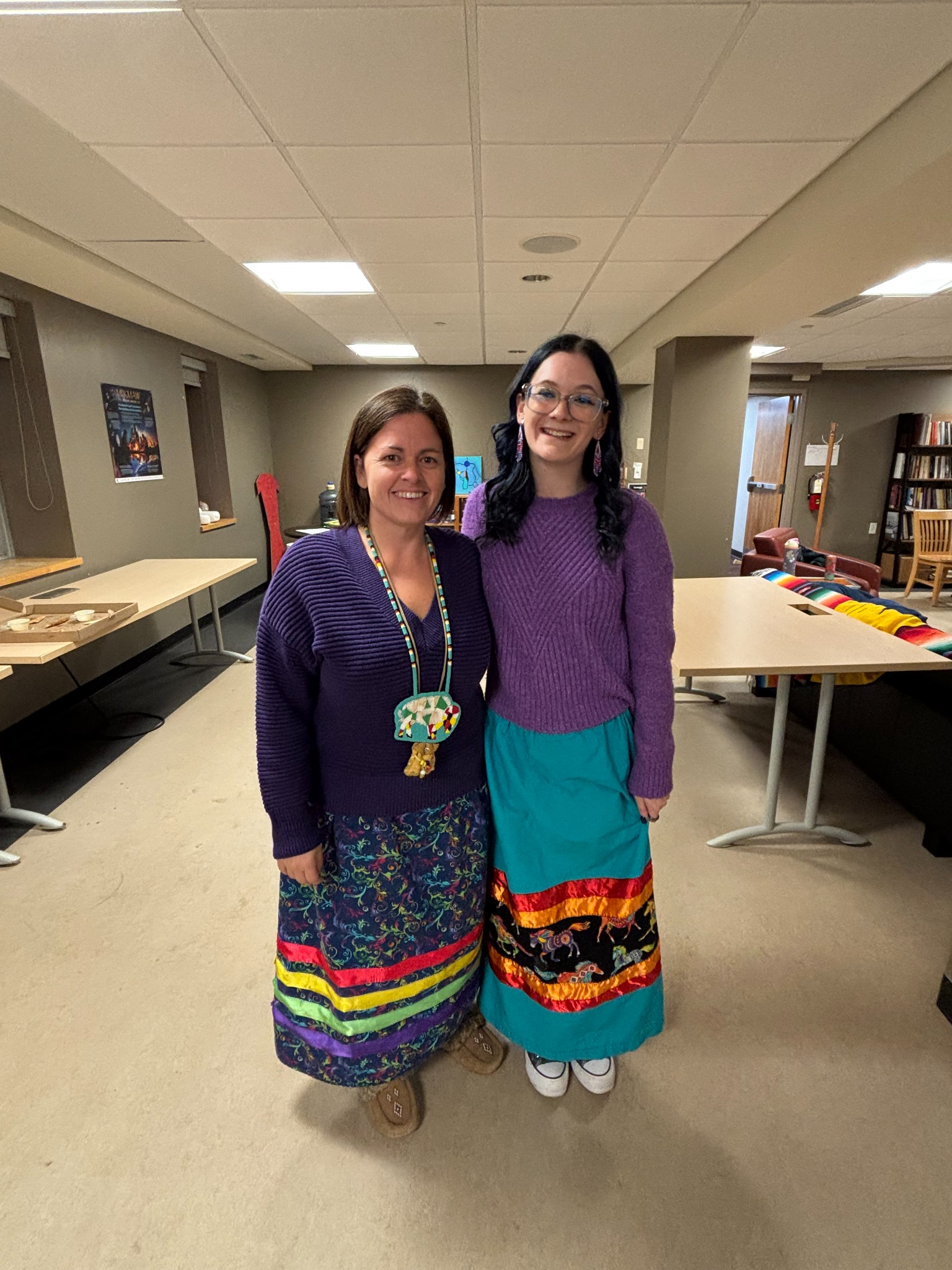
One of those early courses, taught by Dr. Karl Hele, shifted the way she thought about both her studies and herself.
“I liked that we were deconstructing the colonial narrative that we’ve been taught our whole lives,” she says. “I was learning about Canada from an Indigenous perspective… really in depth.”
By the middle of her second year, Souch was struggling with the sciences and questioning whether university was the right fit. Then, in what would become a defining conversation with Hele, she mentioned — almost in passing — that she wished she could simply major in Indigenous Studies.
A few days later, he invited her to talk more.
Hele had recently been at a University meeting learning about independently created majors and saw an opportunity to help Souch shape a program around where her interests were taking her.
“I had been so impressed with Kaite, what she’d done and her drive to get there,” says Hele. “So, if this is what she wanted to do, this is how we could do it — take stuff you’re interested in and then come out with something you’d be proud of.”
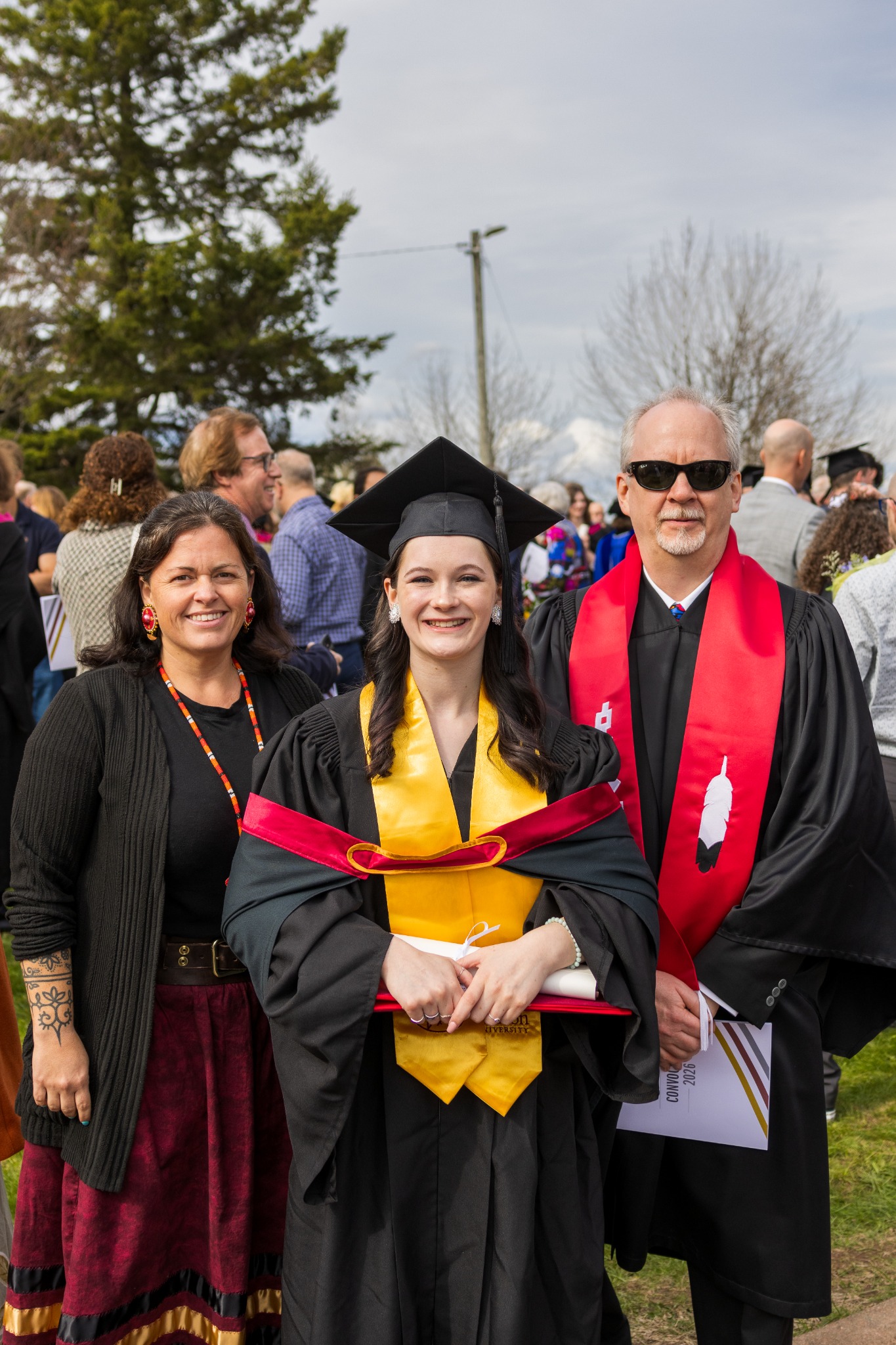
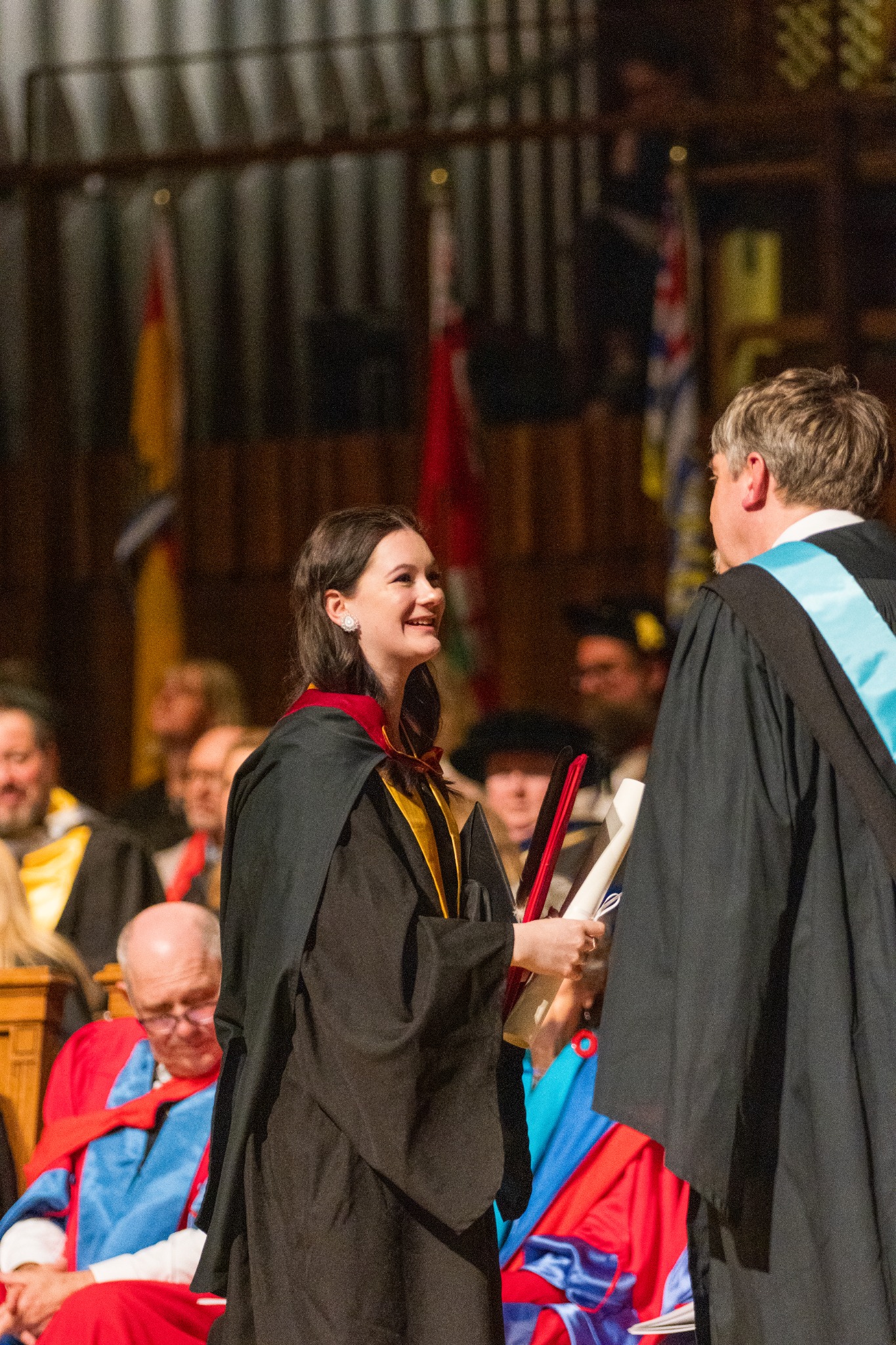
Souch switched environmental science to her minor, built a specially approved major in Indigenous Studies, and became Mount Allison’s first-ever graduate with a major in Indigenous Studies in May 2026.
The flexibility of building her own program allowed her to draw from Indigenous Studies, Canadian Studies, history, and museum and curatorial studies, including a special topics course on decolonizing museums. Just as important were the opportunities to take what she was learning into communities.
Working with Dr. Sacha DeWolfe, Souch participated in several asset-based community development projects with First Nations communities. One summer, she helped coordinate projects across several communities while working on site in Elsipogtog First Nation. Projects ranged from garden beds and community beautification to an outdoor classroom, a warming room beside an outdoor rink, and a paddleboard rental initiative that grew from an idea proposed by a student.
Not every project went as planned — and Souch says some of the most important learning came when they did not.
In one course, she and a classmate planned an ambitious podcast project that ultimately fell short of what they had envisioned. The experience forced them to think carefully about communication, expectations, and relationships with First Nations partners.
“We learned how you need to communicate with First Nations partners, the ethics around working with First Nations partners, and… how to decolonize your approach to research and to working with partners,” she says. “That is something that I still apply to my work today.”
Her undergraduate experience continued to expand from there. A field school in Belize introduced her to Indigenous issues beyond Canada, while a Fulbright Canada Killam Fellowship took her to Arizona. It was during that time away that Souch began seriously considering graduate school.
Today, she is doing just that.
Souch is now completing a master’s degree in Indigenous Governance at the University of Victoria, bringing with her lessons learned through years of community-engaged work at Mount Allison.
For Souch, the relationships behind those opportunities mattered as much as the experiences themselves.
“The Indigenous Studies faculty at Mount A really did encourage me to think outside of the box,” she says. “They pushed me towards things I would have never tried otherwise.”
Her path looks very different from the one she imagined when she first crossed the country five years ago to begin her undergraduate degree in Sackville.
There is also something fitting about the timing of her graduation.
While Souch was building her specially approved major, Hele was also working to develop Mount Allison’s formal major and honours program in Indigenous Studies.
“When she graduated in May, the program had just been approved,” Hele says. “She graduated with all the requirements of the program and was the best example of what the program will look like for others. I can't wait to see what she does next."
Now, with Mount Allison’s new major and honours program in Indigenous Studies in place, other students will have the opportunity to follow a path Souch helped show was possible.
Learn more about Indigenous Studies at Mount Allison: mta.ca/academics/programs-and-degrees/indigenous-studies