
Climate change linked to increase in oyster-borne pathogen in Atlantic Canada
SACKVILLE, NB — New findings of a university-government research team show the marine bacterium Vibrio parahaemolyticus (Vibrio) has increased in tandem with water temperatures in the Gulf of St. Lawrence over the last quarter-century, posing a financial risk to oyster growers already struggling with the parasites MSX and Dermo.
“The federal government has only been monitoring for Vibrio in Atlantic Canada since about 2017, but oyster growers were telling us that they suspected it has been a problem for a while,” says lead author and environmental science graduate William Chapman (’25) and MSc student at McGill University. “I hate to give more bad news to the oyster growers, because they’ve had a tough time in the last few years. But it looks like Vibrio is only going to become a bigger issue.”
Vibrio can cause severe foodborne illness in humans. Oysters are the most common source because they are often eaten raw, which prompted the Canadian Food Inspection Agency (CFIA) to start monitoring for the pathogen in 2017. If levels of Vibrio are too high, oysters are not deemed fit for sale, causing financial losses for the oyster grower.
Different species of Vibrio have been increasing and moving northward as the Atlantic Ocean warms due to climate change and becomes more suitable for Vibrio. When monitoring began in 2017, it was not known whether Vibrio was novel in the area or whether it had gone unnoticed.
The study was recently published in the journal Global Change Biology Communications. Findings highlight how the direct effects of climate change can bring new problems to marine areas where there had previously been no history of occurrence. By comparing the CFIA’s tests with historical environmental data, researchers can reconstruct how the presence of Vibrio in the region has changed over time. We show that there has been a substantial increase in the risk posed by Vibrio since 1998, and this increase can be attributed to warmer waters.
“No region or industry is immune from climate change. This marine organism is a harbinger of challenges facing the aquaculture sector as environmental change occurs,” says Mount Allison Environmental Science Associate Professor and study co-author Dr. Josh Kurek. “With global change comes winners and losers. Unfortunately, more Vibrio presents real risk to human health and livelihoods if ignored.”
Despite the challenges, there may be a silver lining to this research.
“The good news is that our research can help the industry prepare for and mitigate future impacts that Vibrio may bring as our waters continue to warm,” says Dr. Jeff Clements, a research scientist with Fisheries and Oceans Canada in Moncton and co-author of the study.
Funding for this research was provided by Natural Sciences and Engineering Research Council of Canada (NSERC). This study can be obtained free of charge from the Global Change Biology Communications website at https://doi.org/10.1002/gcb4.70024
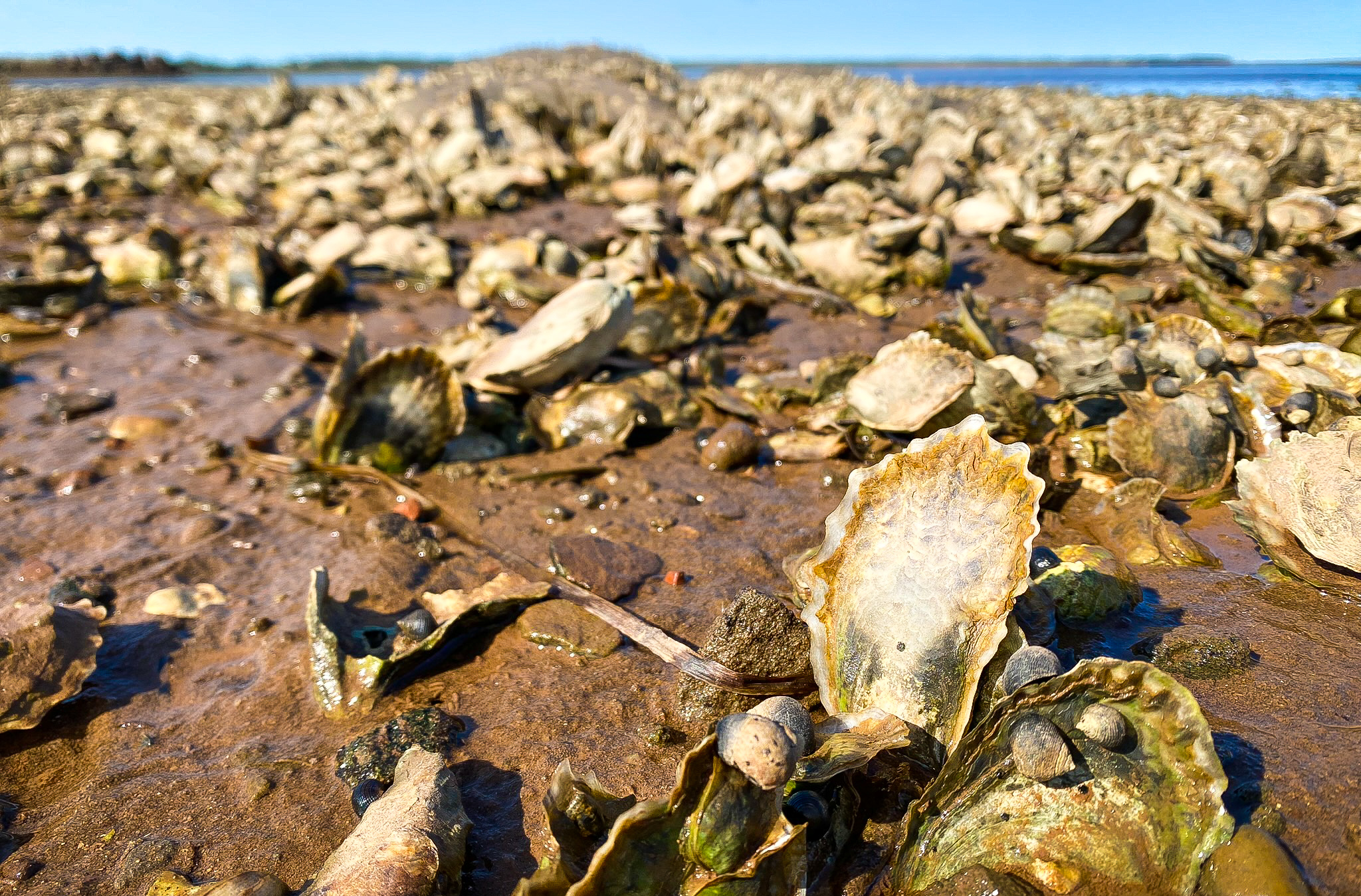
Banner photo: Oysters collected for scientific study. Oyster aquaculture is an important industry in Atlantic Canada, worth more than $42 million CAD in 2022. Credit: JC Clements
MEDIA CONTACTS:
William Chapman (‘25), lead author and MSc student, McGill University, william.m.chapman@mail.mcgill.ca 613-981-0845
Dr. Josh Kurek, Associate Professor of Environmental Science, Mount Allison University, jkurek@mta.ca 506-227-2228