

Applying concepts to a real-world setting with psychology student Olivia Delong: Summer Internship Series
Delong’s internship was made possible thanks to the donor-funded Democracy, Civil Liberties, and Human Rights Internship.
What does your day-to-day look like at your internship with Alzheimer Calgary?
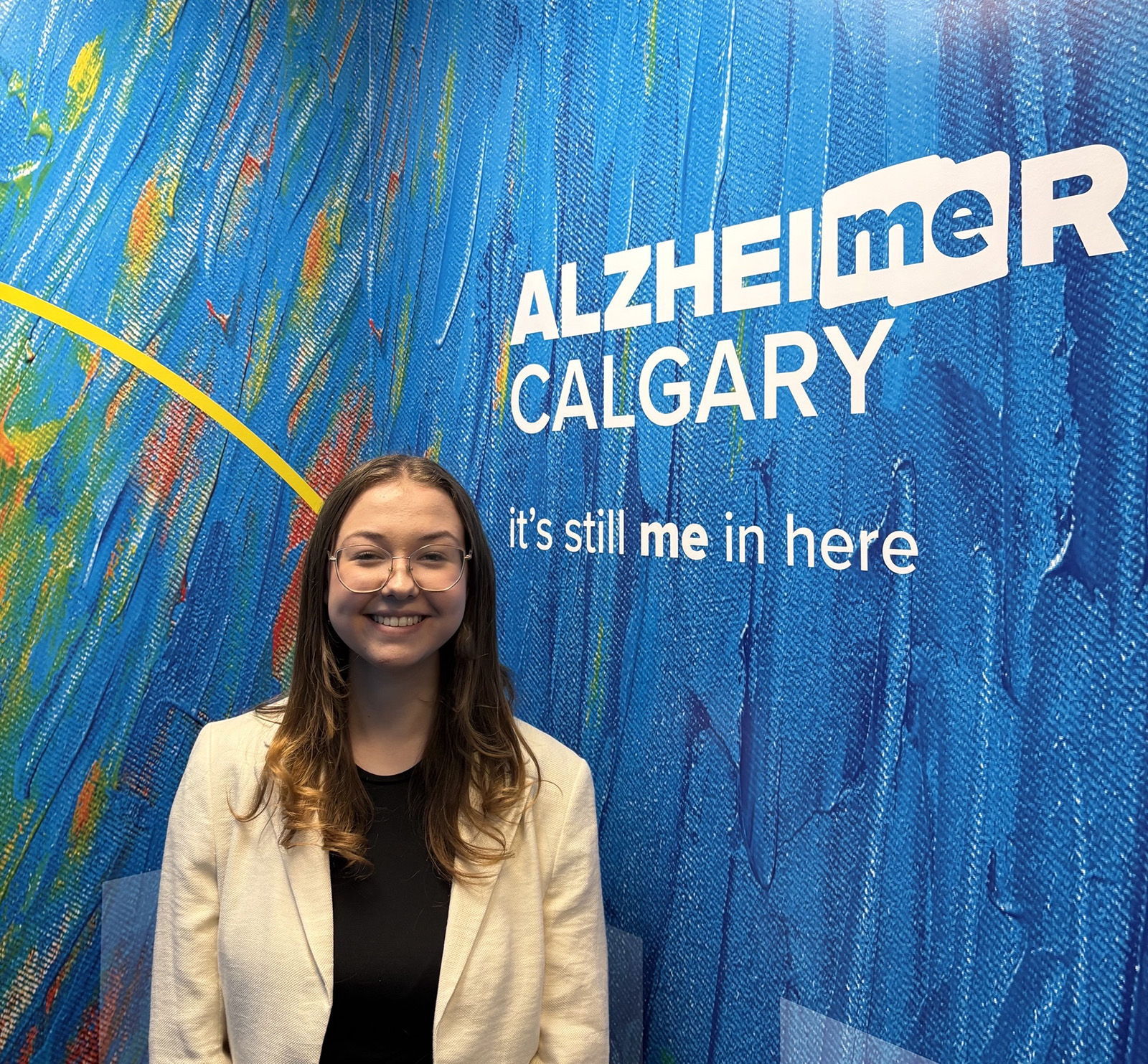
My day-to-day work with Alzheimer Calgary is divided into two main areas. For part of the week, I work in the main office primarily with the Learning and Support Services team where I have been assisting in improving Alzheimer Calgary’s “FirstLink” referral system. Healthcare professionals use FirstLink to connect newly diagnosed individuals living with dementia to various community supports and services. I have also been involved in the “StillMe” campaign, which aims to reduce stigma surrounding dementia and advocate for healthcare systems that support a higher quality of life for those living with it (stillme.ca).
The majority of my internship, however, has been spent at “Club36,” Alzheimer Calgary’s adult day program for individuals living with dementia. Working alongside program facilitators, I help deliver cognitively stimulating activities that support the members’ cognition as well as their social and emotional wellbeing, while also providing respite for their caregivers. Daily programming includes gentle exercise and activities designed to promote cognitive engagement and social connection, such as bean bag toss competitions, art therapy, music therapy, and bingo. My role at Club36 involves facilitating activities, interacting with the members, and providing one-on-one care to those who may require additional assistance.
How did you facilitate this internship in your home city?
I wanted an experience that had a connection to my current studies in psychology, where I could apply concepts from my courses to a real-world setting. I had observed that seniors were often an overlooked group within the healthcare system, with more attention paid to the mental well-being of young people and the working adult population.
As I explored funding opportunities with the Experiential Learning Office, I was inspired by my personal experiences with my grandfather who passed away last summer after living with Alzheimer’s. Witnessing the cognitive, emotional, and social impacts on both him and our family sparked my interest in learning more about Alzheimer’s and the supports available to those affected by it. I was hoping for an opportunity that would allow me to assist in making their lives better.
This led me to Alzheimer Calgary, where I would be able to combine areas of interest in cognition, brain health, aging, and community-based support. Through this experience, I would be able to work directly with individuals living with dementia and their caregivers to gain a better understanding of the psychological and social effects of neurodegenerative diseases.
What are the most important skillsets you will take away from this experience?
With Alzheimer Calgary, I have learned to be a quick and creative problem solver by adapting communication techniques to meet everyone's unique needs. Working with people living with dementia requires growth in adaptability and quick critical thinking, as no two days are the same. I am learning to understand their personal messages and the emotions behind them, as well as to redirect and calm those who may become anxious or agitated throughout the day.
I have also been fortunate to gain valuable skills in program operation and professionalism within an office setting. This has included collaborating with a team, supporting their projects, as well as developing confidence in facilitating presentations and advocating for change.
What connections have you made that have made it an impactful experience now and for the future?
Working alongside program facilitators at Club36 has given me a greater appreciation for the importance of interdisciplinary collaboration in supporting communities. The most impactful connections, however, have been those I have made with the members at Club36 and their caregivers. Connections with the members and hearing caregivers express how much the program means to both them and their loved ones have been the most rewarding part of the summer, as I am able to see that I am making a meaningful impact in the community.
How has this internship experience helped prepare you for your career path?
My experience with Alzheimer Calgary has reinforced my interest in working in the mental health field and has given me valuable experience supporting individuals with complex cognitive and emotional needs.
Having the opportunity to work in a healthcare-related role has given me insight into the challenges that professionals in these positions face, such as compassion fatigue and burnout. Observing these realities has highlighted the importance of practicing self-care and utilizing support systems to sustain long term effectiveness in the field. As I continue toward a career in mental health, these lessons will help develop the resilience and self-awareness necessary to provide effective support to others while maintaining my own wellbeing.
Finally, Alzheimer Calgary has broadened my understanding of the diverse career paths available to individuals with educational backgrounds in the behavioural and social sciences beyond conventional settings such as clinics and hospitals, which I plan to take advantage of when exploring future career opportunities.
What’s next after Mount Allison?
After graduating, I plan to pursue graduate studies in psychology with the goal of becoming a registered Clinical Psychologist to have the ability to work in a variety of different areas.