


A sense of family in the academic world: RBG Labs
The Riley Baxter-Gilbert (RBG) Labs at Mount Allison — a collaboration between Dr. Julia Riley's Integrative Ecology Lab and Dr. James Baxter-Gilbert's Anthropogenic Change Ecology Lab — have big opportunities for students to research New Brunswick's little-known reptiles and amphibians.
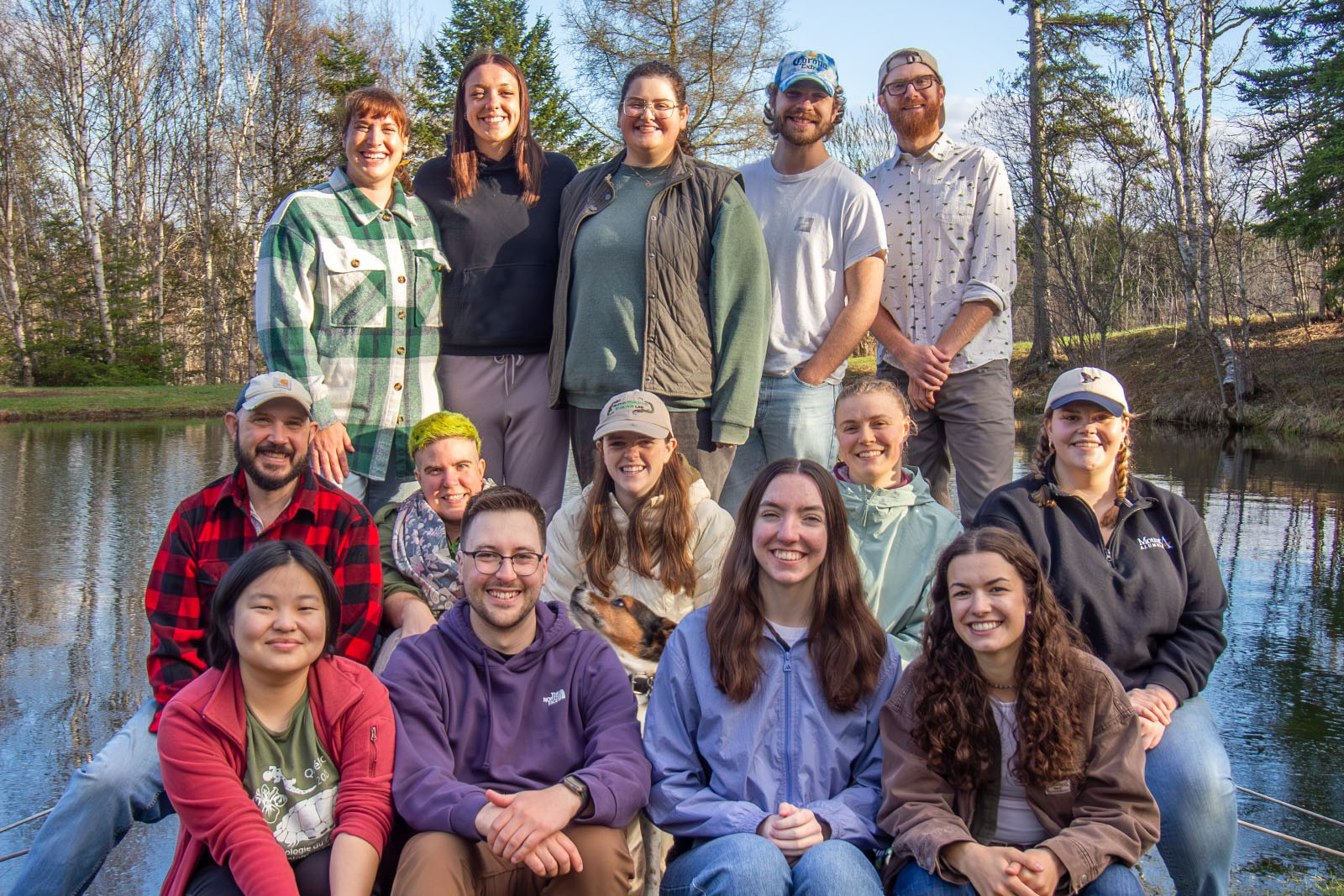
Danielle Alexander ('26) and current MSc candidates Jordyn Williams ('25) and Ashton Leal ('25) have all gone through the RBG Labs for their undergraduate honours research. However, what they discovered was something deeper than what lies in the bogs and marshes.
"It was really that sense of family within the academic world, which was something I really didn't expect going into working with the lab group and in research," Leal says, with Williams and Alexander also recalling the sense of community within the lab and with their supervisors.
For his honours research, Leal studied the four-toed salamander (Hemidactylium scutatum). The four-toed salamander has been observed in New Brunswick for over 40 years, but has mostly been seen at Fundy National Park.
"But then in our lab, Joshua Christiansen and Georgia Christie found a four-toed salamander behind a high school in Riverview," Leal says, noting that these salamanders often prefer wetlands and minimally disturbed forests.
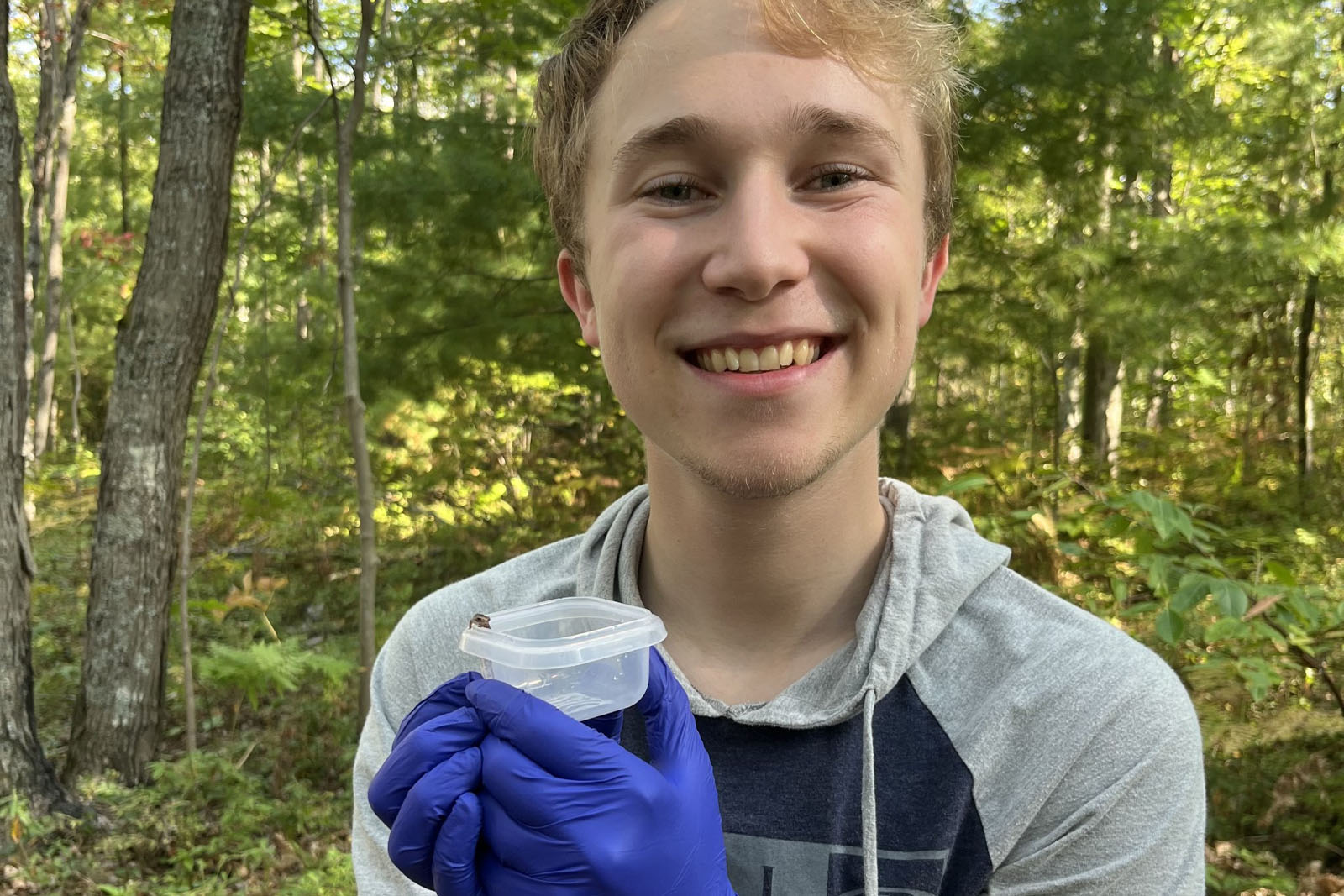
"It was unique and that's where my research went in. Where I looked at the microhabitat preferences of the salamanders at the site to see if they’re seeking out special pockets that align more with natural forests compared to where salamanders were choosing. This local knowledge is going to hopefully impact the wider science community."
Recently, Leal and Christie’s research on four-toed salamanders was published in PeerJ, an open-access, peer-reviewed scientific publisher and mega-journal.
After graduating from Mount Allison, Leal's time as a lab assistant aiding Williams helped him in deciding to pursue a master's at Dalhousie University, co-supervised by Dr. Baxter-Gilbert. Williams also had a formative experience in the labs, which inspired further master's studies at Mount Allison.
"My honours research was looking into the population ecology of eastern painted turtles (Chrysemys picta picta) and snapping turtles (Chelydra serpentina) in the Jemseg Grand Lake watershed, which is central to New Brunswick," Williams says.
Williams noted that although the 'hotspot' population of turtles had been known since the late 1950s, there was a lack of research on turtles in the area.
"My job for my honours research was just to go and trap as many turtles as I possibly could, creating an initial assessment of how the turtle population of the area are, and they're very healthy," Williams says. "Now, my master's research is elaborating on that. I study the exact same population and the exact same ponds, but I'm expanding from my honours research and looking into more [of] their spatial ecology."
Williams recalled tracking one turtle, named John Lennon, who had vanished from his pond and had trekked about 500 meters into another one. "He took this massive journey, was out in the woods for about a month. He stayed in that other smaller pond and then made the entire journey all the way back to the main pond, and it was just hilarious," Williams says.
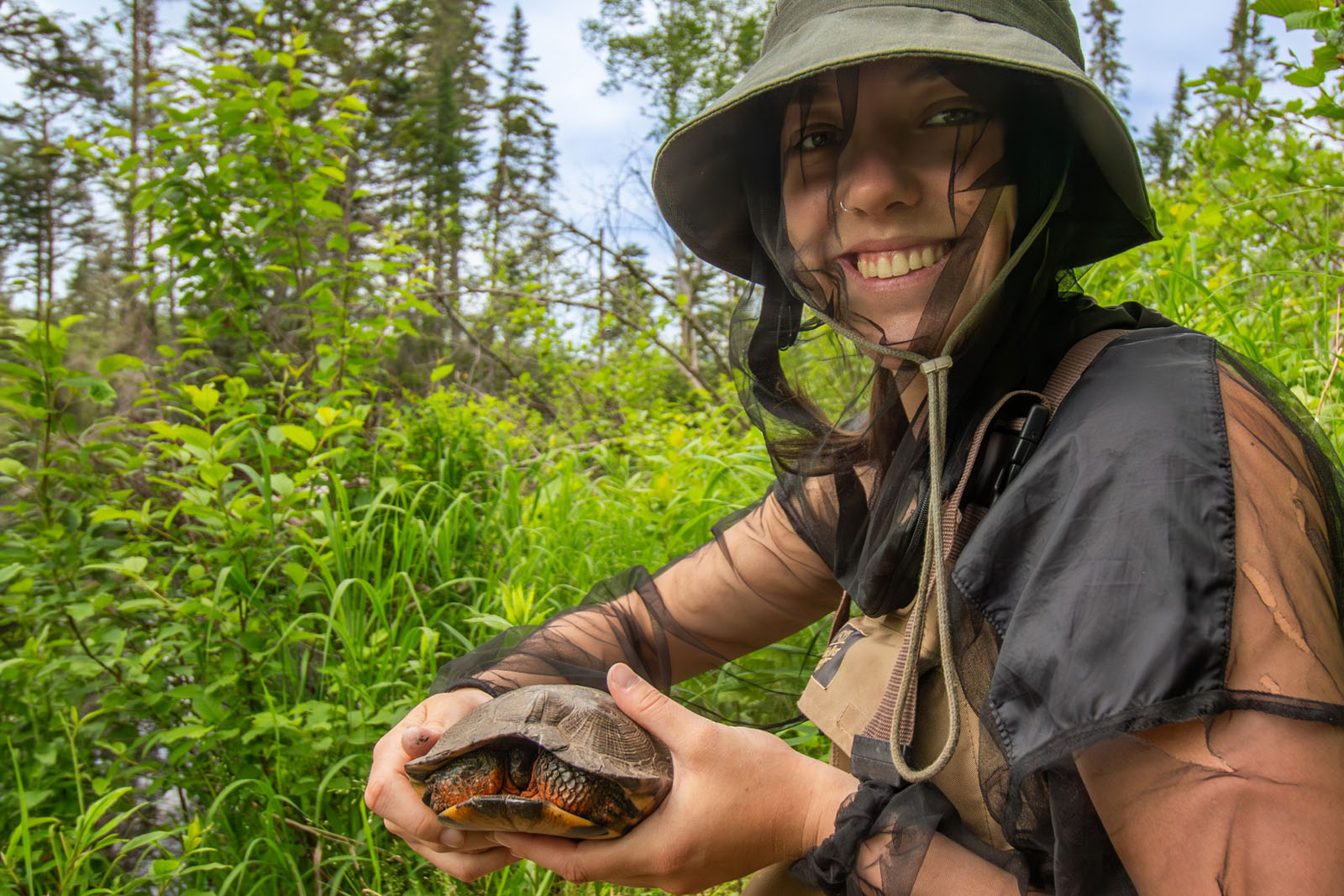
Recent graduate Alexander was also uncovering important research on wood turtles (Glyptemys insculpta) following a mass mortality event in 2014.
"No one had really checked on them, so we were kind of going in blind, and we didn’t really know if they were recovering, [or] had started to recover, like what the population status was,” Alexander says, noting that 11 turtles were tracked during her summer research.
The rehabilitation of one turtle, Bambi, who had been in captivity for 11 years, was a highlight for Alexander.
"With the repatriation of the turtle, not very many people have done that. And I think that will contribute to not only just wood turtles, but all types of turtles as well,” Alexander notes. “I think that the goal is just to contribute to the greater scientific world, and to just know as much as we can about them, and we’ll probably continue to do that."
Leal agrees. "We’re happy to increase the knowledge of the more unknown critters that we have here in our backyard," Leal says. "We don’t really know a lot about the amphibians and reptiles in Atlantic Canada; they’re pretty understudied. So us gaining more information about these species helps them to better survive in our communities."
Students can volunteer to help in the RBG Labs no matter their academic year or course of study. Follow on Instagram (@rbglabs) or visit their website at rbglabs.ca.
Banner photo: Jordyn Williams