


Before Mount Allison launched graduates, Sackville launched ships
It's easy to think of Sackville as a university town. Every September, a couple thousand students arrive from across Canada and around the world, filling the campus and community with new energy, an unmistakeable marking the beginning of another academic year.
But nearly two centuries ago, the busiest place in town wasn't the campus. It was the river.
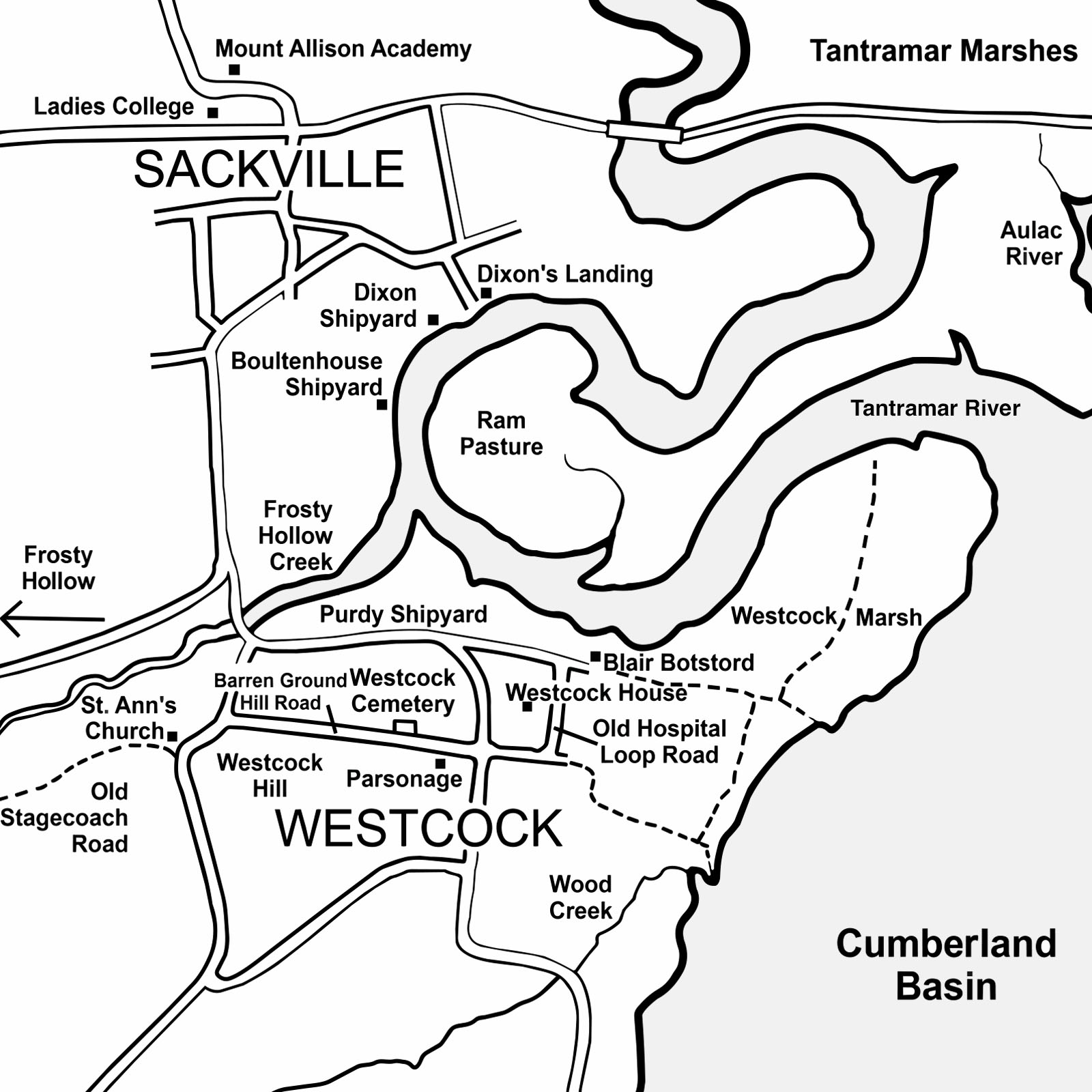
Along the banks of the Tantramar, skilled shipwrights spent months — sometimes years —building towering wooden sailing ships by hand. When a vessel was ready, the entire community gathered to watch it slide into the tidal waters, beginning a journey that could take it to ports across the Atlantic.
Between 1824 and the end of the nineteenth century, more than 160 ships were built in Sackville, making the community one of New Brunswick's leading shipbuilding centres. It was an industry that brought prosperity, attracted new families, and shaped the character of a young town.
It was also the world into which Mount Allison was born.
When merchant Charles Frederick Allison founded the Wesleyan Academy in 1839, he did so in a community energized by trade and maritime enterprise. While Allison was not a shipbuilder himself, the success of local merchants and master shipbuilders helped create a town that believed in investing in education, community, and opportunity.
Many of the names that defined Sackville's shipbuilding era are still familiar today; the Boultenhouses, Purdys, Woods, and Dixons helped establish the community's reputation as a centre of craftsmanship and commerce. Their businesses employed local workers, supported church and town life, and contributed to the shaping of a town that was growing in both ambition and influence.
Among them was master shipbuilder Charles Dixon, whose shipyard produced some of the community's most celebrated vessels, including the Sarah Dixon, one of the largest wooden sailing ships ever launched from Sackville. In the decades since, members of these same families became connected to Mount Allison as students, benefactors, and community leaders, reflecting the close relationship between the University's early years and the town that surrounded it.
By the early twentieth century, as technology shifted, wooden sailing ships were no longer being built. Mount Allison, however, was just beginning to define its place in the world.
Today, if you find yourself walking through campus or along the Waterfowl Park, you might find it hard to imagine the bustle that once filled the nearby riverbanks. Yet the University's story cannot be told without this piece of the town’s history. The resilience, craftsmanship, and optimism of the shipbuilders also helped build a community where higher education could flourish.
Every generation leaves something behind. In nineteenth-century Sackville, it was ships that carried the town's name across the oceans. Today, it is Mount Allison graduates who carry that legacy forward, embarking on journeys of their own, wherever the next horizon may be.