


30 years strong
It was the fall of 1996. Karen Stentaford ('99) was already in the second year of her BFA when she finally took her first class with the photography professor everyone talked about in her first year. Even on sabbatical the year before, Holownia had become a kind of legend among students.
"There was already this presence," Stentaford remembers. "The upper-year students talked about being in his classes. They would say he pushes you, he’s honest, he says what’s on his mind — and he’s fully supportive."
There were other details too, the kind that become part of a certain legends over the years: the rare cameras, the stories, and Sparky, Holownia’s dalmatian, who followed him everywhere — including to Senate meetings.
For Stentaford, who had already begun working with photography in high school, Holownia’s classroom offered something larger than technique. Photography became less an assignment than a way of moving through the world.
"It’s not just a class," she says. "It’s kind of a lifestyle. You decide and you commit to it. If you’re in, you always have your camera with you. It’s about responding to the world around you all the time."
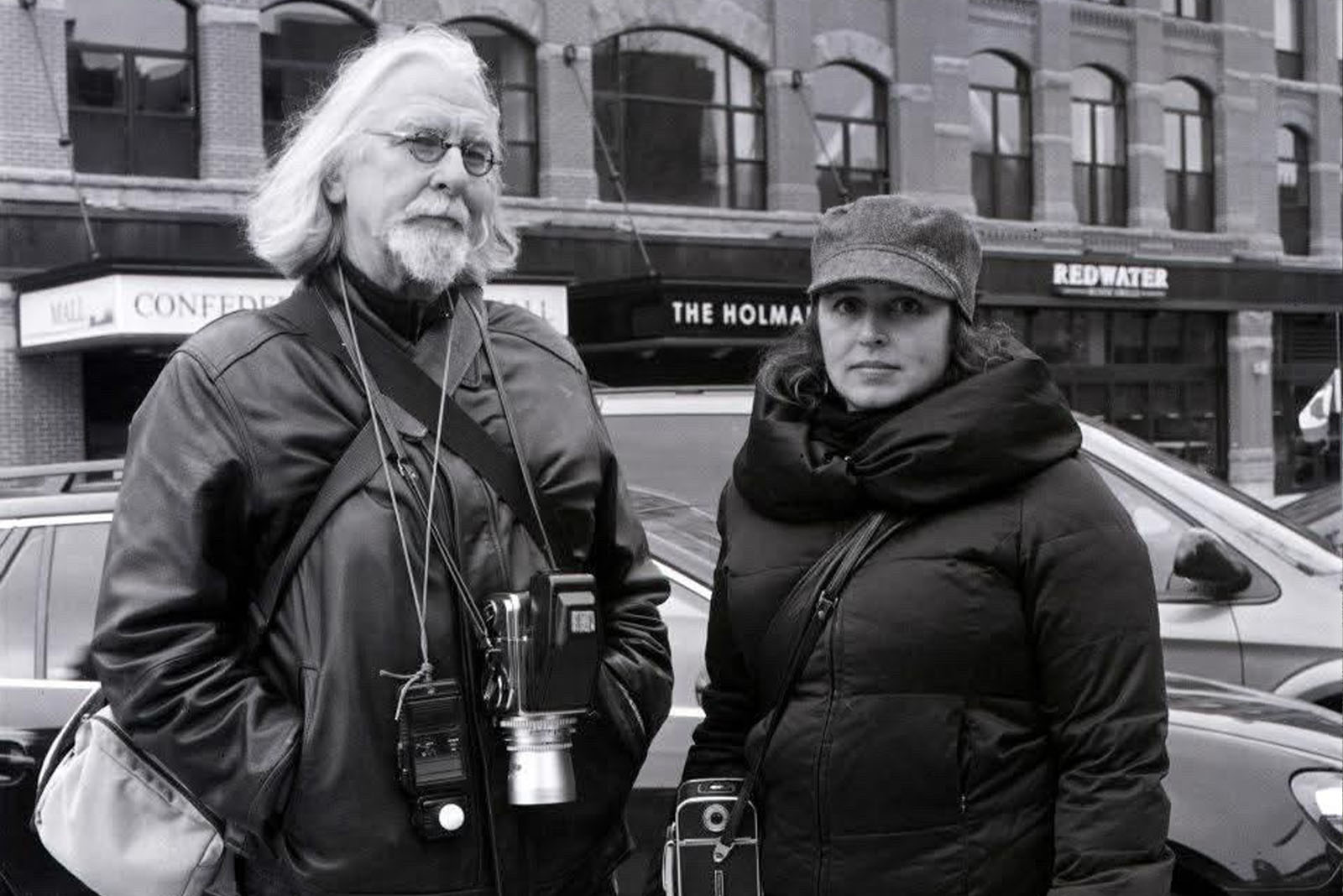
Nearly 30 years later, that early connection between student and teacher has become something much larger: a mentorship, a friendship, a shared artistic lineage, and, in many ways, a Mount Allison story.
This spring, Stentaford, now an associate professor in the Pierre Lassonde School of Fine Arts, was named the winner of the 2026 Scotiabank Photography Award, one of Canada’s most prestigious honours in contemporary photography. As the winner, she will receive a $50,000 cash prize, a solo Primary Exhibition at The Image Centre in Toronto, and a book of her work to be distributed internationally.
For an artist whose practice is rooted in slowness, place, community, and careful looking, the recognition marks a major national moment — not only for Stentaford, but for photography in Atlantic Canada.
When her name was called, Stentaford says it took a moment to register.
"It was my picture. It was my name," she says. "I’ve followed this award since it started in 2010. I’ve always looked to the artists who won or were shortlisted as people to learn from and celebrate. Even being a finalist felt amazing. To win was surreal."
Holownia’s reaction was simpler. "I wasn’t surprised," he says. For Holownia, the award reflects the depth and importance of Stentaford’s contribution to Canadian photography. It also brings needed attention to artists working outside the country’s largest centres.
Stentaford is the first Atlantic Canadian to receive the award, a distinction that feels especially meaningful for an artist whose work is deeply tied to this region. Based in Sackville, within Mi’kma’ki, she works across photographic media and is known for her use of large-format photography and wet plate collodion processes. Since 2013, her Photomatic Travelling Tintype Studio has brought participatory photography into communities, inviting people into the slow, physical, an intimate process of image-making.
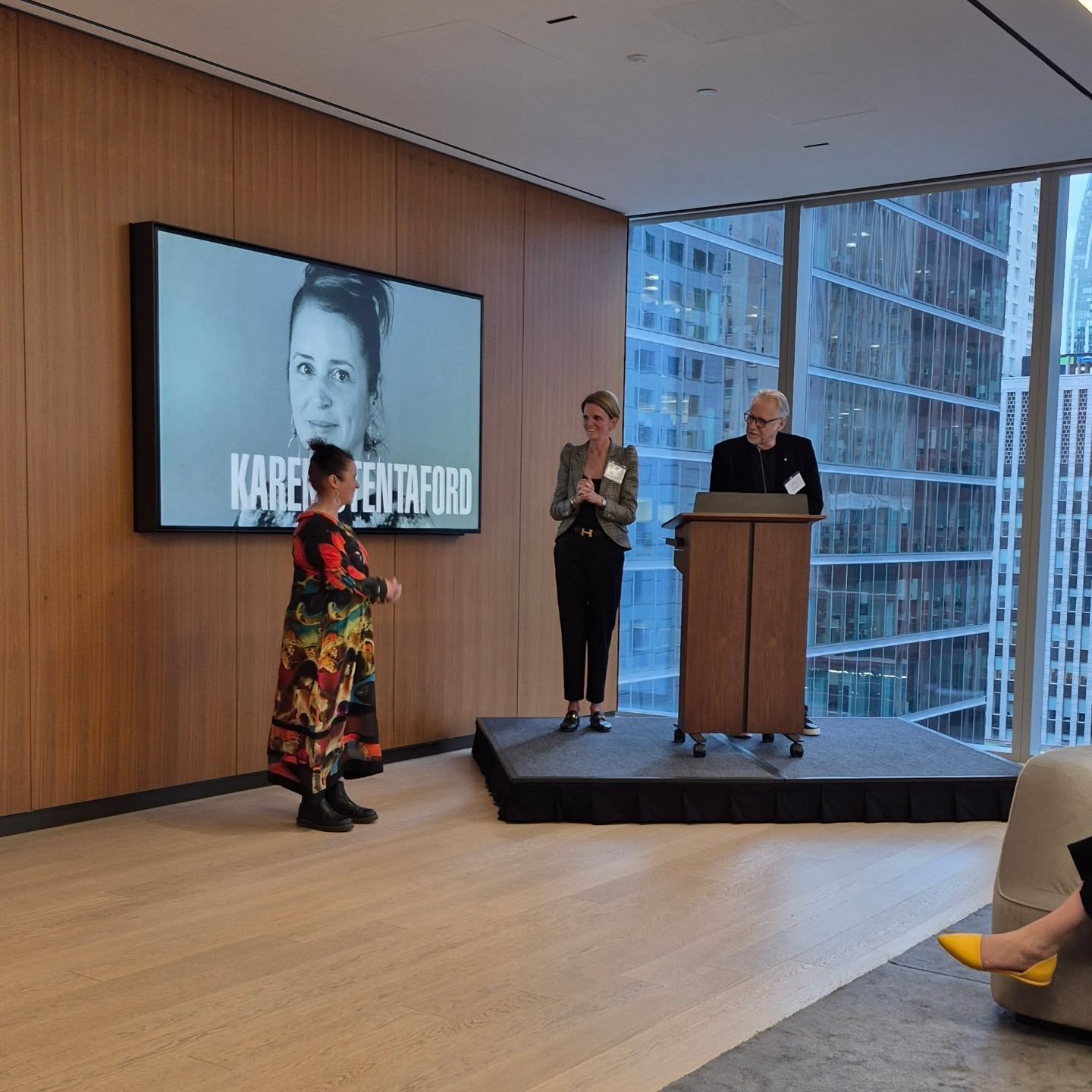
"For a Maritime artist to be recognized is a huge boost — not only to Karen, but to the entire art community in Eastern Canada," he says. "This award encompasses many of the things that aren’t always readily available to artists here: a major exhibition, a book, and a place on a national stage."
Holownia says he began to see Stentaford’s commitment take shape when she was a student working seriously with the view camera. The view camera suited Stentaford. Its pace matched something in her.
"I don’t go through life fast," she says. "I think I was drawn to that pace. I would get excited about being able to see so much on the ground glass and knowing that was exactly how everything was going to look in the negative."
Rather than moving quickly through hundreds of images, the view camera photographer must slow down, study the subject, and create one considered image.
"It’s about getting to know a subject, getting to know a place or a person," says Stentaford. "Observation is very much part of the process."
The process became a foundation for her work. It also became one of the many threads connecting her practice to Holownia’s.
Their artistic practices are different, but they are grounded in similar values: patience, attention, presence, and a sustained relationship with place.

That kinship was brought into focus in January 2024 with of a feather, an exhibition at the Owens Art Gallery that placed Stentaford’s and Holownia’s work in conversation with one another. Curated by Emily Falvey, of a feather offered a public expression of a relationship that had been developing for decades — first as student and teacher, then as colleagues, friends, family, and fellow artists.
The exhibition was deeply meaningful for both. It was, in many ways, a community moment. It brought together art, teaching, friendship, family, grief, and memory. It also later travelled to the StFX Art Gallery, extending that conversation beyond Sackville.
For Stentaford, working together on something so personal was emotional and affirming. The exhibition also held space for the life and influence of Holownia’s late partner, Gay, whose presence shaped the lives and work of both artists, as well as many others.
"Our work is amazingly different, but actually the same," he says. "It comes from the same place. That’s why of a feather works so well."
What is different, though, Stentaford laughs, is that Holownia has often described her as operating in 'third dimensional time'. Between them, it is known simply as 'Karen time'.
But the slowness is not incidental. It is central to the work.
"At a time when everything is so fast-paced, this is how I spend most of my days working," she says. "There’s a desire now to work more physically, more hands-on. We can get so caught up in the immediacy of the digital world. Hopefully, the work helps someone realize the importance of slowing down, looking up, and being present."
It is a lesson she first learned as a student and one she continues to pass on to her own students today.
Holownia had a phrase in his teaching days that he’s returned to often: 'don’t leave home without a camera'. It was both practical advice and a philosophy. To make work, you had to be ready to notice the world.
He also told students that work accumulates. At the time, Stentaford says, she heard the words. Years later, she understands them differently.
"You figure things out through working, not just thinking about working," she says. "You have to start and then work through it. Things accumulate. That’s how you figure things out."
Their relationship also accumulated.
After Stentaford graduated from Mount Allison in 1999, she went on to study education at NSCAD University and Mount Saint Vincent University and later taught art in Toronto. She and Holownia stayed in touch. Their connection continued through art, through Atlantic Canada, through shared friends and family, and eventually through work.
In 2005, Stentaford returned to Mount Allison as a photo technician. Holownia was then department head, and the two began working closely as colleagues.
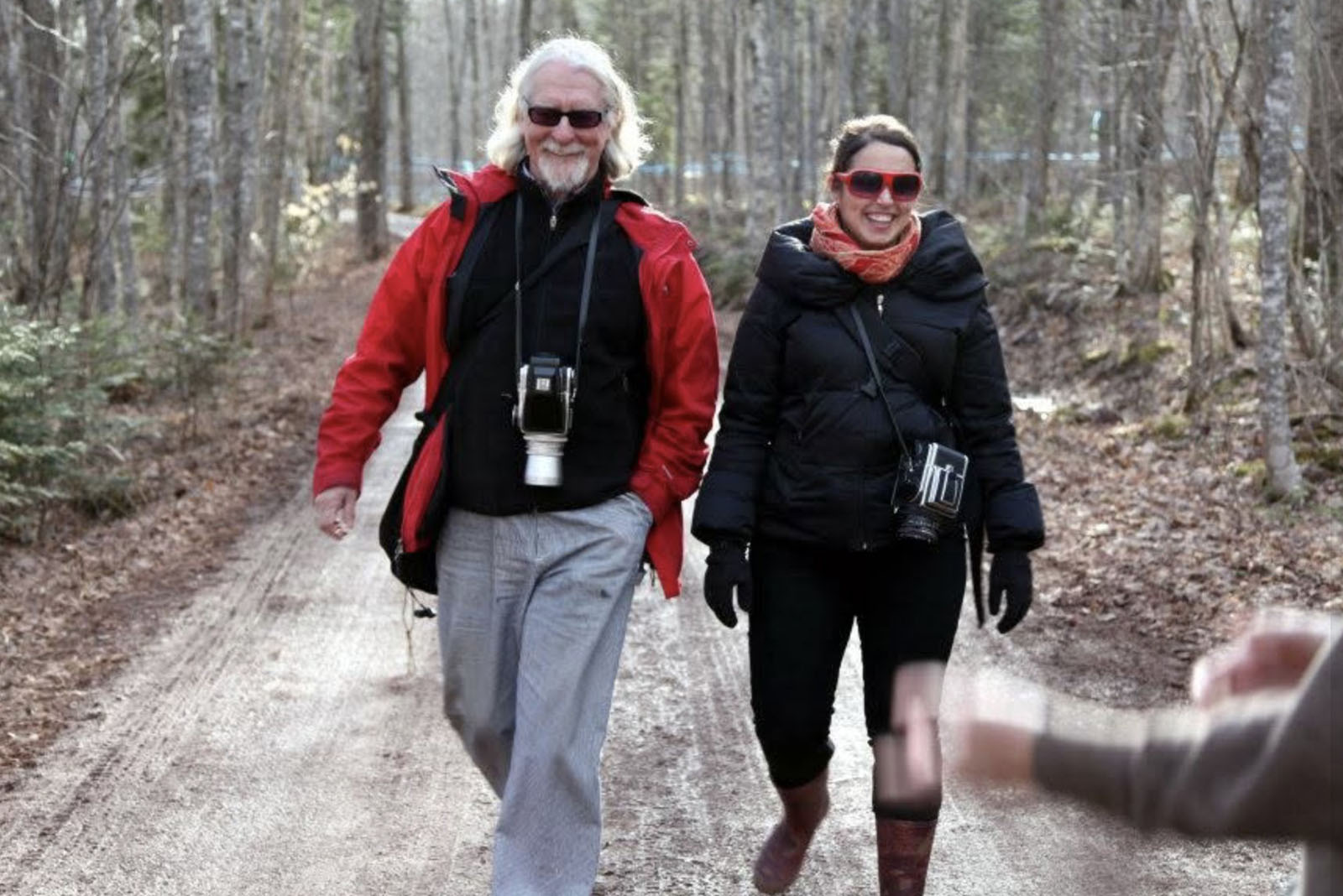
"If I think about mentorship, it’s not so much just about the classroom," Stentaford says. "It’s more of that bridge into life and community. When I came back to work here, it was like being part of a community rather than just a job."
That sense of community is something both artists see as central to Mount Allison’s Fine Arts program and to learning photography in Sackville.
Holownia built much of his own career by engaging with the history of Tantramar and the wider Maritimes. Not every student who comes to Sackville makes work about this place, he says, but every artist is influenced by the place where they work.
"If you can fit your artistic practice into a community where you live, it’s that much more fulfilling," he says.
Stentaford agrees.
"Even if the work isn’t about the place, it’s influenced by the place," she says. "We’re lucky in Sackville and at Mount Allison. It’s a small, tight, supportive community."
The influence of Mount Allison photography extends well beyond the University itself. Stentaford points to Photo East, the Atlantic Canadian photography festival she helped found, as one example of the relationships and artistic networks that continue to grow from Mount Allison’s program. Alumni, current students, artists, photojournalists, educators, and community members are all part of that expanding circle.
"The community doesn’t just end when you graduate," she says. "There’s always this keeping in touch, this continual support for each other."
For Holownia, that broader legacy reflects the strength of the Pierre Lassonde School of Fine Arts and the kind of liberal arts education Mount Allison makes possible.
"People leave Fine Arts and what they go on to do may not be linear," Stentaford says. "But that experience remains an important influence in what they are doing."
Good mentorship in the arts, they agree, is not about creating work in someone else’s image. It is about sharing knowledge, listening carefully, and helping artists find their own voice.
"The last thing you want to do is teach someone and have them feel stuck making the same work as you," says Stentaford. "It’s about sharing what you know, but also really listening and seeing. There has to be openness for someone to take what they need and build their own voice."
Stentaford says Holownia’s influence has extended far beyond the classroom. He modelled a life in which making art and teaching art were not separate callings, but intertwined parts of the same practice.
"I looked to Thaddeus and I could see that there was this possibility," she says. "Here, there is an expectation that you are an artist and an educator, and they are not separate. You don’t have to go far away to make a career in art."
Holownia, in turn, says Stentaford has taught him patience. "Karen has taught me to be patient and not react to situations that can be unnerving," he says. Then he adds, with a smile, another practical lesson: "Don’t leave home without duct tape."
As Stentaford looks ahead, the next year will be full. Her Scotiabank Photography Award exhibition will open at The Image Centre in Toronto in May 2027, accompanied by a book of her work. She will continue teaching, making photographs, and sharing the experience with students.
"That’s a really important part," she says. "Part of how I got to where I am is through that relationship, that way of life."
Holownia, meanwhile, is continuing his own work. He is returning to Saskatchewan to photograph the changing social and cultural landscape shaped by mega-farming, while also beginning the large task of organizing his archive and considering what will happen to a lifetime of work.
The two remain connected in the ways they always have: through photography, teaching, conversation, field trips, family, food, dogs, and the steady rhythm of lives shaped by art.
Stentaford says one of the conversations they have returned to again and again is the importance of making work that is true to yourself, rather than chasing trends.
"It’s like a steady thing," she says. "Making work that is important to you and your voice."
For a relationship that began in a photography classroom in 1996, it is fitting that the lesson still holds. The work accumulates. The looking deepens. The community widens. And sometimes, after years of quiet commitment, the world looks up and pays attention.